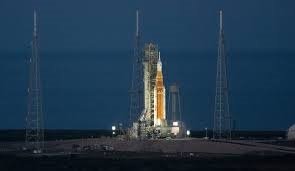
In a dramatic step forward for NASA’s Artemis program, the agency’s massive Space Launch System (SLS) rocket—topped with the Orion spacecraft—was successfully rolled out from the Vehicle Assembly Building (VAB) at Kennedy Space Center back to Launch Complex 39B on Friday, March 20, 2026. This marks the second time this year the moon rocket has made the slow journey to the pad, following critical repairs inside the hangar-like VAB.
The 322-foot (98-meter) behemoth began its trek in the middle of the night, perched atop one of NASA’s iconic crawler-transporters—massive, tank-like vehicles that have been in use since the Apollo era. The 4-mile (6.4-kilometer) journey, typically completed at a pace barely faster than walking speed, was delayed for several hours due to high winds but finished by midday after about 11 hours.
This rollout comes after a frustrating setback earlier in the year. In late February 2026, engineers identified a helium flow issue in the rocket’s upper stage, known as the Interim Cryogenic Propulsion Stage (ICPS). A faulty seal was blocking proper helium pressurization, preventing full access and troubleshooting at the launch pad. As a result, NASA rolled the entire stack back to the VAB for detailed diagnostics and repairs in a more controlled environment.
Once inside the high bay, teams quickly pinpointed and replaced the problematic seal, conducted tests to verify the fix, and ensured the system was ready for operations. The repair addressed what could have been a showstopper for the mission timeline, preserving the possibility of launching in the early April window.
Artemis II represents a pivotal milestone in NASA’s return-to-the-Moon ambitions. Unlike the uncrewed Artemis I test flight in 2022, this mission will carry four astronauts on a daring lunar flyby—circling the Moon without landing before returning to Earth. The crew, who entered quarantine in Houston this week, will rely on the SLS and Orion to demonstrate the spacecraft’s life-support systems, navigation, and reentry capabilities in deep space.
If all goes according to plan, the rocket could lift off as early as April 1, 2026, with additional daily opportunities through April 6. NASA has opted to skip an additional full wet dress rehearsal (a fueling test) this time around, given the hardware has already undergone multiple cryogenic loadings. The next fueling will occur on launch day itself.
The path to this point hasn’t been smooth. Earlier in 2026, hydrogen leaks and other technical hurdles pushed back initial plans, forcing the rocket back indoors once before. Yet each delay has allowed engineers to refine the vehicle, building confidence in its reliability for crewed missions.
NASA officials remain cautiously optimistic. “We’re comfortable targeting April 1 as our first opportunity,” launch leaders have stated, while emphasizing that the hardware will dictate the final go/no-go decision. “We’ll launch when we’re ready.”
This rollback-to-rollout sequence underscores the painstaking precision required for human spaceflight beyond low Earth orbit. As the SLS stands tall once more at the seaside pad, the Artemis program inches closer to its goal: sustainable lunar exploration and eventual crewed missions to Mars.